Sustainable healthcare case study: Re-using oral nutrition supplements at Eastern Health
Monday 18 August 2025
Eastern Health (EH) has more than 60 locations and delivers more than 1.5 million episodes of patient care annually in Victoria, providing a range of emergency, surgical, medical and general healthcare services, including maternity, palliative care, mental health, drug and alcohol, residential care, community health and statewide specialist services to people and communities that are diverse in culture, age, socio-economic status and healthcare needs.
Summary:
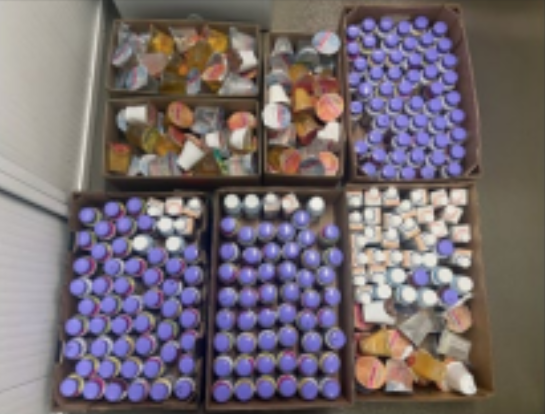
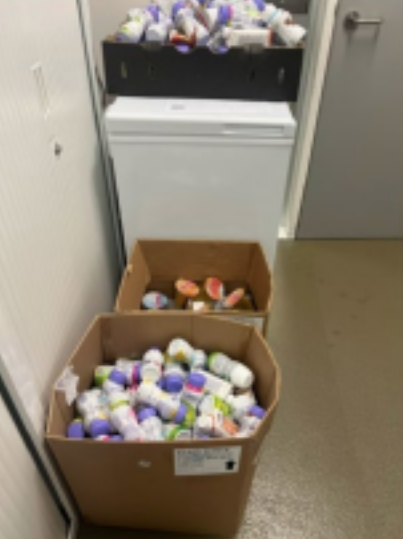
Following research investigating the safety of reusing packaged food items, EH implemented the re-use of oral nutrition supplements (ONS) (returned to the kitchen unopened on patients' trays) across 7 sites. Annually, this change in practice saved ~5900 plastic bottles from going to the landfill and resulted in ~$9000 in cost savings.
Problem:
In 2019, EH received a grant from the Victorian Department of Health to investigate the safety, operational feasibility and environmental impact of collecting unopened non-perishable packaged food items for reuse. This study identified that the bacteria on the food packaging appeared to be within acceptable limits for reuse.
A point prevalence study investigating ONS wastage across four EH sites was completed by dietetic students over two consecutive days and identified that unconsumed ONS ranged from 17-60% across all sites. Reasons for ONS wastage (as reported by patients) included dislike, poor appetite, too many drinks provided, and taste fatigue. The majority of ONS were disposed of in the main kitchen landfill.
Goals:
- Reduce oral nutrition supplement wastage
- Reduce plastic waste to landfill
- Reduce costs of oral nutrition supplements
Implementation process:
Infection Control
A meeting was facilitated between the EH infection prevention and control (IPAC) team and the infection control lead at another health service who had an ONS reuse protocol in place for several years to address the infection prevention and control support. This provided an opportunity to understand how risks could be mitigated to avoid compromising patient safety. Following this meeting, approval was received from IPAC to commence a 2-week trial period for the reuse of ONS (collection, sanitisation and re-serving of unopened ONS).
Trial Period
The 2-week trial period was conducted at the largest hospital site given that wastage was highest there. Once a process was approved by IPAC at this site, a local operating procedure was drafted and the ONS reuse was rolled out at the remaining sites one at a time.
Food Safety
The foodservice staff were responsible for collecting unopened ONS bottles returned to the kitchen on patient trays, and storing them in a box. Dietitians, dietetic allied health assistants or volunteers, attended the kitchen at least weekly to sanitise the bottles using Clinell wipes. Bottles were checked to ensure they were within date, label information was visible, and that the foil lid underneath the twist cap was intact. If the bottle was deemed safe for re-use, it was sanitised using a Clinell wipe and stored for reuse. Any stickers that were hard to remove were soaked in water to assist removal.
Given the high usage of wipes, approval was later sought from IPAC to use an alternative method for sanitising. The process was changed to use hot water and antibacterial detergent with a chux, or, at sites with e-Water available, to use this which would not require detergent.
Documentation and tracking process
The process was documented via a Local Operating Procedure to ensure that the correct process is followed by all the staff involved across sites. Recognising the importance of reducing ONS waste production in the first place, alongside this process, a food first flow chart was developed for dietitians to help reduce unnecessary ONS prescriptions.
Data is continually being collected at all sites. This data is available via a shared spreadsheet, to track the amount of ONS that are being reused – including the type and flavour, and to monitor over time.
The Outcome:
Data collected across 5 sites identified that around 5900 bottles, equating to $9000 were saved per year. This data is likely an underestimate as 2 sites were not able to collect data.
Next Steps:
This process has been a springboard for two further reuse projects currently being explored.